

What Is the REGON Number in Poland and Why Is It So Important
REGON: What It Is, How It Works, and Why It’s Essential for Doing Business with Poland

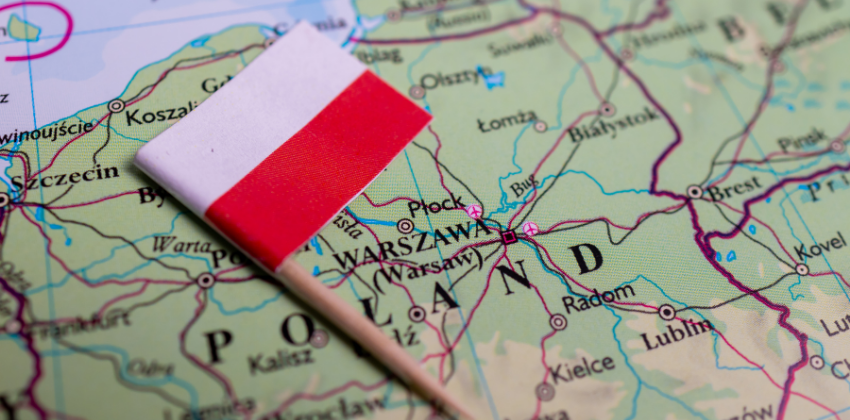
For Polish companies and foreign businesses operating in Poland, the REGON code is one of the key identifiers, together with the NIP (tax identification number). REGON is also the name of the national database for the identification of economic activities, managed by the Central Statistical Office (GUS).
What is REGON in Poland?
The REGON (Rejestr Gospodarki Narodowej, or National Business Register) is Poland’s main database for the identification of economic activities. It is managed by the Central Statistical Office (GUS), which assigns a unique 9- or 14-digit code—also called REGON—to companies and institutions operating in Poland.
The REGON code, which is different from tax (NIP) or court (KRS) codes, is used to uniquely identify a business, classify it, and for statistical purposes.
The REGON Register, established in 1995, is a fully digital central database that collects essential information on entities operating in Poland, such as geographic location, legal form, and type of activity.
Registration in the REGON Register is mandatory for the following entities:
- Legal persons;
- Organizational entities without legal personality;
- Natural persons carrying out economic activities (including agricultural activities);
- Local units of entities subject to the obligation.
What information does the REGON Register contain?
The REGON Register contains various information about registered entities, including:
- Business name (for natural persons carrying out economic activity, also the owner’s first and last name);
- Registered office (and residence of the natural person carrying out economic activity);
- Office phone number, email address, and website;
- Tax identification number (NIP) including status;
- Legal form and ownership form;
- Business activity, including the main activity;
- Date of establishment, start, suspension, resumption, or termination of activity;
- Register entries, bankruptcy declarations, ongoing procedures;
- Expected number of employees;
- Local units;
- For agricultural businesses, agricultural land area and total area.
What is the REGON code and how is it structured
The main functions of the REGON code are related to statistics and the formal identification of companies and other entities such as associations, foundations, and public bodies operating in Poland.
Access to the public GUS database also makes it possible to verify data and assess the reliability of business partners.
The REGON code generally consists of 9 digits: the first two indicate the region (voivodeship) where the company is registered, digits three through eight are a unique serial number, and the last is a check digit.
In some cases—especially for very large companies or those with multiple branches—the REGON code has 14 digits: the first 9 correspond to the parent company’s unique code, while the following 5 identify the local unit.
How to obtain a REGON code
In most cases, the REGON number is automatically assigned when an economic activity is registered in Poland. Entities such as local authorities and universities, which are not required to register with KRS or CEIDG but must have a REGON code, can obtain it by contacting their municipality or the statistical office.
The code can also be requested online via the ePUAP service (Unified Electronic Platform for Administrative Services).
How to consult the REGON Register
The REGON Register is open and accessible to everyone through the search engine available on the dedicated government website. Here, you can search for economic entities registered in the REGON Register by entering either the REGON code or, alternatively, the entity’s tax identification number (NIP).
Requests for register extracts, also available via API, provide access to information such as:
- REGON code;
- Entity name;
- Address, phone numbers, email address, and website (if available);
- Tax identification number (NIP);
- Legal form;
- Type of activity carried out;
- Local units.

RELATED ARTICLES

Carbon free energy for Our Cloud  Low CO2





© 2024 Openapi SpA, a single-member company, under the direction and control of Open Holding Srl.
Viale Filippo Tommaso Marinetti 221 - 00143 Rome - Business Register: 1378273, Share Capital: €50,000.00, VAT Number: IT12485671007, Recipient Code: 'USAL8PV' - Certified Email: 
Openapi is certified in: Quality System **UNI EN ISO 9001:2015** - Data Quality **ISO 25012:2014** - Security Management **ISO/IEC 27001:2022** - Geneder Equality According UNI PdR 125:2022
All prices are net of any VAT, stamp duty, registration fees, or other taxes that may be due. All logos listed on the portal are copyrighted and owned by their respective owners.