

Understanding Authentication: 2FA, MFA and Biometric Security
A guide to 2FA, MFA and biometrics: how to protect online accounts while balancing security and user experience

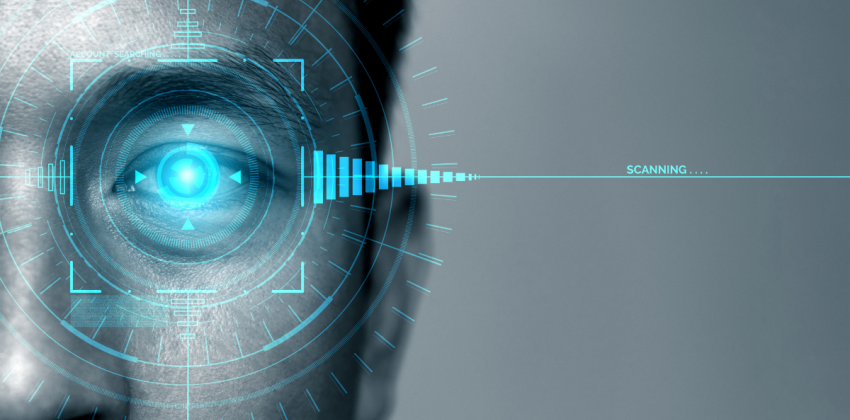
Every day, millions of login credentials become the target of phishing attacks and database breaches. As a result, protecting user accounts has become a fundamental requirement. Traditional authentication methods based on usernames and passwords no longer provide the level of security needed to safeguard users' online data.
The solution is therefore not to rely on increasingly complex passwords, but to pair the password with a second form of identity verification of a different nature (such as a push notification on a smartphone or facial recognition).
This is where Multi-Factor Authentication (MFA) comes into play: an authentication method that grants access only after verifying two or more distinct authentication factors.
What is Multi-Factor Authentication?
Traditional authentication systems based on username and password, also known as "single-factor authentication", can now be compromised with relative ease. According to IBM's Cost of a Data Breach Report 2026, 10% of unauthorized access to personal data results from compromised credentials.
As a result, new authentication methods are becoming increasingly common. These methods require more than one form of verification to grant access and are collectively known as Multi-Factor Authentication (MFA).
To understand how multi-factor authentication works, it is first necessary to understand the mechanisms an IT system can use to verify a user's identity. These are the types of credentials we use to identify ourselves online, also known as authentication factors:
- Something you know: such as a password, PIN code or answers to security questions;
- Something you have: such as a smartphone, an authentication app or a physical security token;
- Something you are (biometrics): such as a fingerprint, facial recognition or voice recognition.
Multi-factor authentication requires two or more authentication factors from different categories of authentication, as listed above.
What is 2FA (Two-Factor Authentication) and how does it work?
One of the most common types of multi-factor authentication requires two distinct authentication factors to access websites and IT systems. The most common Two-Factor Authentication methods combine:
- A password (or PIN) and an OTP code sent via SMS or email;
- A password (or PIN) and a temporary verification code generated by an authenticator app (such as Google Authenticator or Authy) installed on the user's smartphone;
- A password (or PIN) and a physical security key (USB/NFC security keys that are inserted into or tapped against a computer);
- A password (or PIN) and biometric authentication.
Today, the last two methods are considered the most secure forms of two-factor authentication currently available.
One important point to remember is that, to be more secure than traditional login credentials, multi-factor authentication must always require factors from two different authentication categories (knowledge, possession and inherence). If a system requires a password and a second verification step belonging to the same authentication category—for example, the answer to a security question—it is not considered Multi-Factor Authentication. The second factor must always belong to a different category than the first.
How Multi-Factor Authentication Works: Biometric Authentication
Systems designed to provide a higher level of security rely on multi-
factor authentication (MFA), which requires users to provide more than two authentication factors and, in most cases, includes biometric authentication.
When combined with a password or other authentication factors, biometric authentication provides a high level of security because it is based on the user's unique biological characteristics.
Implemented through fingerprint readers (Touch ID) or facial recognition sensors (Face ID), which are now standard features on smartphones, biometric authentication has become increasingly widespread not only because it is secure, but also thanks to its ease of use.
Biometric authentication eliminates the need to remember passwords and access keys or carry physical devices such as USB security tokens. However, biometric authentication is not completely risk-free.
Secure Authentication: 2FA vs MFA
When it comes to security measures designed to prevent phishing attacks and personal data breaches, it is difficult to identify a solution that provides the highest level of protection while also remaining simple and convenient for users of an online service.
There are, however, significant differences between 2FA and MFA, where MFA refers to authentication requiring more than two factors. While two-factor authentication represents the baseline configuration for protecting accounts against credential compromise, adding additional authentication factors further strengthens security and makes it possible to build tailored security layers capable of stopping virtually all automated attacks without significantly affecting the user experience.
As mentioned above, cyberattacks continue to become more sophisticated and constantly evolve, which means that no MFA solution can be considered completely secure. Biometric data, for example, cannot be changed like a traditional password. For this reason, it must be protected through encryption and secure hardware (such as the device's dedicated security chip) and should never be transmitted to remote servers.
One of the most advanced authentication methods available today is the passkey, which combines MFA and biometric authentication into a single seamless action. When a user signs in to a website, the device uses a cryptographic key securely stored on the device itself, which is unlocked through biometric verification. This makes authentication simple, instant and resistant to phishing attacks.

RELATED ARTICLES

Carbon free energy for Our Cloud  Low CO2





© 2024 Openapi SpA, a single-member company, under the direction and control of Open Holding Srl.
Viale Filippo Tommaso Marinetti 221 - 00143 Rome - Business Register: 1378273, Share Capital: €50,000.00, VAT Number: IT12485671007, Recipient Code: 'USAL8PV' - Certified Email: 
Openapi is certified in: Quality System **UNI EN ISO 9001:2015** - Data Quality **ISO 25012:2014** - Security Management **ISO/IEC 27001:2022** - Geneder Equality According UNI PdR 125:2022
All prices are net of any VAT, stamp duty, registration fees, or other taxes that may be due. All logos listed on the portal are copyrighted and owned by their respective owners.