

IBAN: What It Is and How to Verify It
International Bank Account Number: when to verify a bank account's IBAN and how to do it

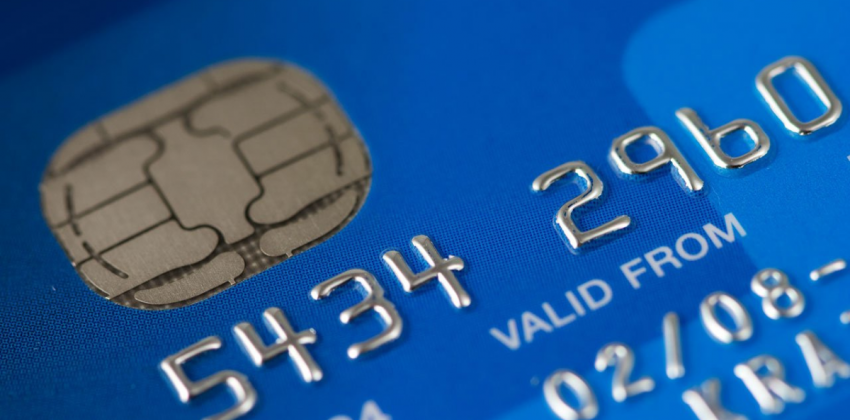
The IBAN is the standard used to uniquely identify current accounts—whether held with banks, electronic money institutions, or payment accounts—facilitating the processing of both international and domestic payments. Adopted in 80 countries worldwide, the IBAN is also one of the cornerstones of the European SEPA (Single Euro Payments Area) system, which enables payments across Europe within seconds and at no additional cost.
What is an IBAN?
The IBAN (International Bank Account Number) is an international alphanumeric code that uniquely identifies a bank account. In Italy, the code consists of 27 characters and contains the bank account details in a structured format, identifying the country, the financial institution, and the account number.
Created in 1997 by ISO (the International Organization for Standardization), the IBAN was originally introduced to facilitate international bank transfers, which were expensive and particularly complex transactions because each country had its own banking coordinate system, rules, and processing times.
For many years, the IBAN was used only for international transactions. Then, on January 1, 2008, it became mandatory for all domestic bank transfers. Meanwhile, in the early 2000s, the SEPA (Single Euro Payments Area) was established to harmonize payment relationships between financial institutions in more than 30 countries, relying on the standardization provided by the IBAN.
IBAN: How Is It Structured?
Although SEPA promotes standardization, this does not mean that the IBAN is identical in every country. ISO has defined a fixed format that applies only to the first four characters of the code: the first two represent the country code (e.g. IT for Italy, FR for France, GB for the United Kingdom, etc.), while the following two are check digits.
ISO has also established a maximum length of 34 characters. Within this limit, however, each country is free to determine the length of its IBAN and organize its internal banking information.
In Italy, for example, the IBAN consists of 27 characters and includes the CIN code, ABI, CAB, and the account number, similarly to French bank accounts. In Germany, on the other hand, the IBAN consists of 22 characters because it combines the bank and branch identifiers without including the national CIN, while in Lithuania it contains only 20 characters.
The structure of the Italian IBAN is as follows:
- IT (2 letters): the country code;
- 2 digits: the international check digits;
- 1 letter: the national CIN code;
- 5 digits: the ABI bank code;
- 5 digits: the CAB branch code;
- 12 digits: the bank account number.
IBAN Calculation: How to Read the Code
If you want to extract specific information from an IBAN—for example, to identify the bank from the IBAN—you need to understand how the code is structured.
To identify the bank where the account is held, you need to look at the digits that come after the first five characters, that is, after the letter indicating the national CIN. The group of five digits found at that position in the code represents the bank identifier, which identifies the financial institution.
If, instead, you want to identify the branch where the account is held, or determine whether the funds are being sent to an online bank account, you need to locate the branch code, which is the sequence of five digits immediately following the bank identifier.
Unlike the bank and branch identifiers, the BIC/SWIFT code is not included within the IBAN. It is a separate code (made up of 8 or 11 characters) used to identify a financial institution worldwide and is essential for transfers outside the SEPA area or in currencies other than the euro.
How Can You Verify an IBAN?
Verifying an IBAN is particularly useful in two situations: when you want to ensure that it is formally correct—for example, to avoid typing errors—and when you want to verify that it is active and belongs to the intended account holder.
An IBAN check can therefore be carried out in different ways:
- IBAN format validation: a formal validation that checks whether the IBAN is mathematically correct by applying the standard validation algorithm;
- IBAN and bank details verification: this service retrieves the complete details of the associated financial institution and verifies its reachability within the SEPA payment network;
- IBAN account holder verification: this check confirms that the IBAN belongs to the person you intend to send the transfer to. Over the past year, SEPA countries have started implementing this verification ("Verification of Payee" (VoP) or Name Check) within their payment systems to prevent fraud and scams. The verification is performed in real time and, if the account holder's name does not match the beneficiary's name, the banking application displays a specific warning.
Although the length of the code and the validation tools vary from country to country, verifying a foreign IBAN follows the same principles. In fact, international Name Check is now a mandatory standard throughout the entire SEPA area.

RELATED ARTICLES

Carbon free energy for Our Cloud  Low CO2





© 2024 Openapi SpA, a single-member company, under the direction and control of Open Holding Srl.
Viale Filippo Tommaso Marinetti 221 - 00143 Rome - Business Register: 1378273, Share Capital: €50,000.00, VAT Number: IT12485671007, Recipient Code: 'USAL8PV' - Certified Email: 
Openapi is certified in: Quality System **UNI EN ISO 9001:2015** - Data Quality **ISO 25012:2014** - Security Management **ISO/IEC 27001:2022** - Geneder Equality According UNI PdR 125:2022
All prices are net of any VAT, stamp duty, registration fees, or other taxes that may be due. All logos listed on the portal are copyrighted and owned by their respective owners.